

Workshop on
Large Language Models for Multimodal Data Fusion
📍 Shenyang, China, November 12-15, 2026
🤝 Held as part of the IEEE International Conference on Data Mining (IEEE ICDM 2026)
📅 November 2026
About the workshop
The Workshop on Large Language Models for Multimodal Data Fusion (LLM4MDF) is a specialized, in-depth forum collocated with the IEEE International Conference on Data Mining (ICDM). It targets the emerging intersection of large language models (LLMs), multimodal learning, and data fusion, which are high-impact directions aligned with the core mission to advance data mining theory, algorithms, and applications.
LLM4MDF focuses on LLM-driven fusion of text, images, audio, video, time series, graphs, and sensor data, bridging semantic understanding and heterogeneous data integration.
This workshop directly extends the scope of ICDM on multimodal data mining, heterogeneous data integration, and large-model-driven knowledge discovery. It complements the main conference by fostering cross-community collaboration on LLM-powered multimodal fusion, addressing critical challenges in unifying diverse data types for reliable, interpretable, and scalable data mining.
By bringing together researchers and practitioners, LLM4MDF drives state-of-the-art advances in multimodal data mining and supports the goal of shaping the future of data science.
Themes and topics
We explore how large language models can be leveraged to fuse and mine heterogeneous multimodal data sources, investigating emerging approaches that are reliable, interpretable, and scalable.
Topics of interest include, but are not limited to:
- LLM-based multimodal data representation, alignment, and fusion architectures.
- Dynamic, adaptive, and interpretable multimodal data fusion mechanisms.
- Multimodal knowledge extraction, reasoning, and generation.
- Scalable, efficient, and robust multimodal data fusion systems.
- Real-world multimodal data fusion applications.
Submissions
SUBMISSION GUIDELINES
Important dates
- Paper submission
due:
August 20, 2026
-
Notification: September 18, 2026
-
Camera-ready: October 5, 2026
What to submit
We welcome the following types of submissions:
-
Regular papers Authors are invited to submit original papers, which have
not been published elsewhere and which are not currently under consideration for another journal,
conference or workshop. Manuscripts must be submitted electronically through the online submission
system.
Paper should be limited to a maximum of ten (10) pages, in the IEEE 2-column format (https://www.ieee.org/conferences/publishing/templates.html),
including the references and any possible appendices. Submissions longer than 10 pages will be
rejected without review. All submissions will be triple-blind reviewed by the Program Committee on the
basis of technical quality, relevance to scope of the conference, originality, significance, and
clarity. The following sections give further information for authors.
How to submit
-
Formatting and submission: Please follow the submission guideline from
the ICDM
2026 Submission Website.
-
Submission Site: https://wi-lab.com/cyberchair/2026/icdm26/scripts/ws_submit.php?subarea=S
- Paper submission due: August 20, 2026
- Notification: September 18, 2026
- Camera-ready: October 5, 2026
- Regular papers Authors are invited to submit original papers, which have not been published elsewhere and which are not currently under consideration for another journal, conference or workshop. Manuscripts must be submitted electronically through the online submission system. Paper should be limited to a maximum of ten (10) pages, in the IEEE 2-column format (https://www.ieee.org/conferences/publishing/templates.html), including the references and any possible appendices. Submissions longer than 10 pages will be rejected without review. All submissions will be triple-blind reviewed by the Program Committee on the basis of technical quality, relevance to scope of the conference, originality, significance, and clarity. The following sections give further information for authors.
- Formatting and submission: Please follow the submission guideline from the ICDM 2026 Submission Website.
- Submission Site: https://wi-lab.com/cyberchair/2026/icdm26/scripts/ws_submit.php?subarea=S
Program
CHECK OUR PROGRAM
ICDM 2026 | Workshop Day | Thursday | November 12, 2026
Room: London
Time: 15:50-16:50
| Time | Activity | |
|---|---|---|
| 15:50-16:00 | 🌟 | Welcome and Introduction |
| 16:00–16:45 | ⚡ | Oral Presentation
3 full papers: 12 min talk + 3 min Q&A.
1. MIRAGE: Mechanism-Informed Regime-Adaptive Causal Diagnosis for Industrial Time SeriesGuowei Zhu, Zhiru Li, Hexiao Zhou, Zexiao Xiao, and Wuhou Yao2. SAGE: Safety-Aware Grounding with External-Knowledge Enhancement for Safety Alignment of Multimodal Large Language ModelsYou Yan, Jinpeng Zhai, Bo Liu, Ziyu Wang, Ting Zhang, and Honggui Han3. MDEF: Multi-Report Deep Ensemble Fusion for 3D CT Report GenerationTung Duong Ta, Tim Oates, Manas Gaur, Trong-Nghia Nguyen, Tien-Cuong Nguyen, Tuan-Cuong Vuong, Trang Xuan Mai, and Thien Van Luong |
| 16:45 | ✨ | Closing Remarks |
Organization
ORGANIZERS
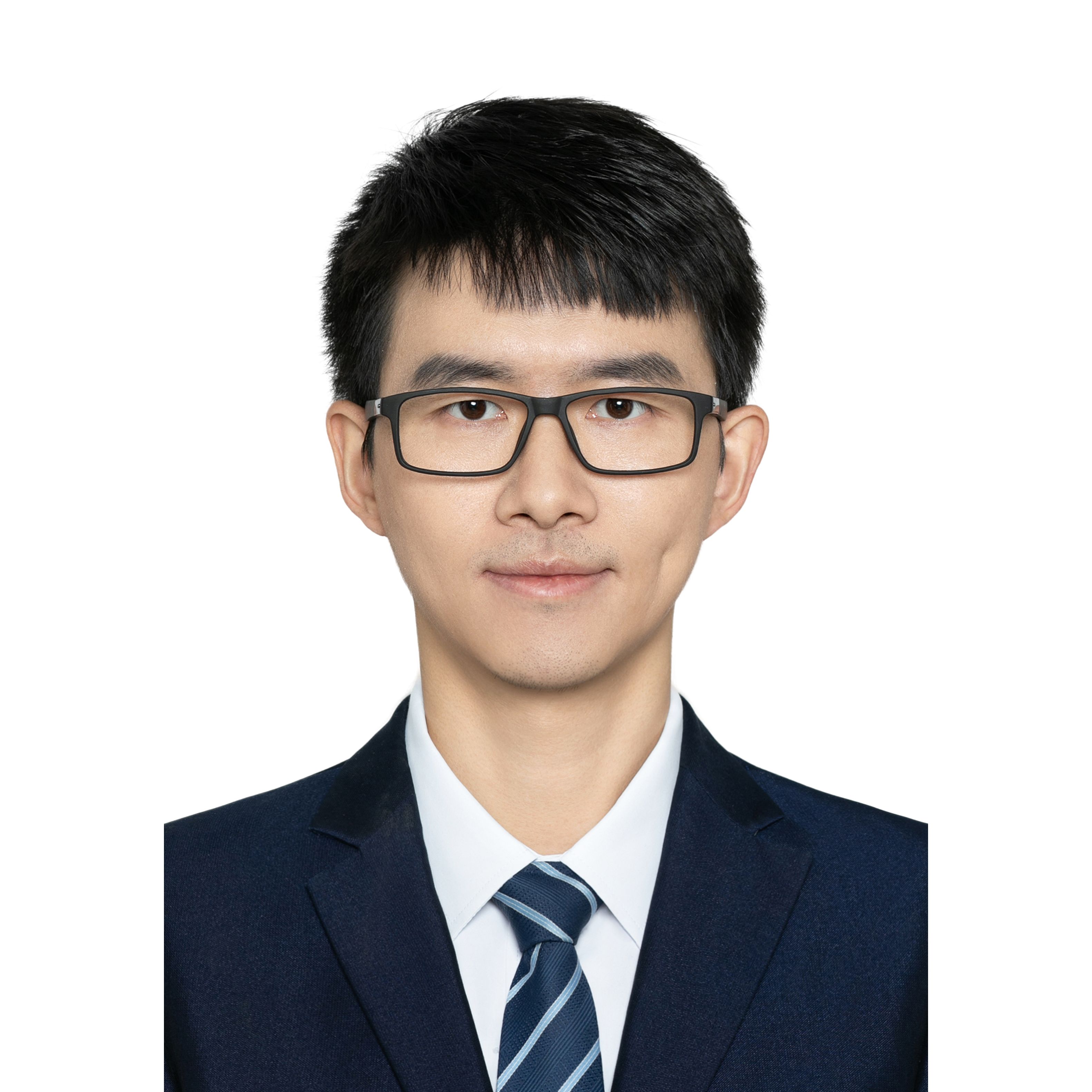
Weiwei Jiang
Beijing University of Posts and Telecommunications, China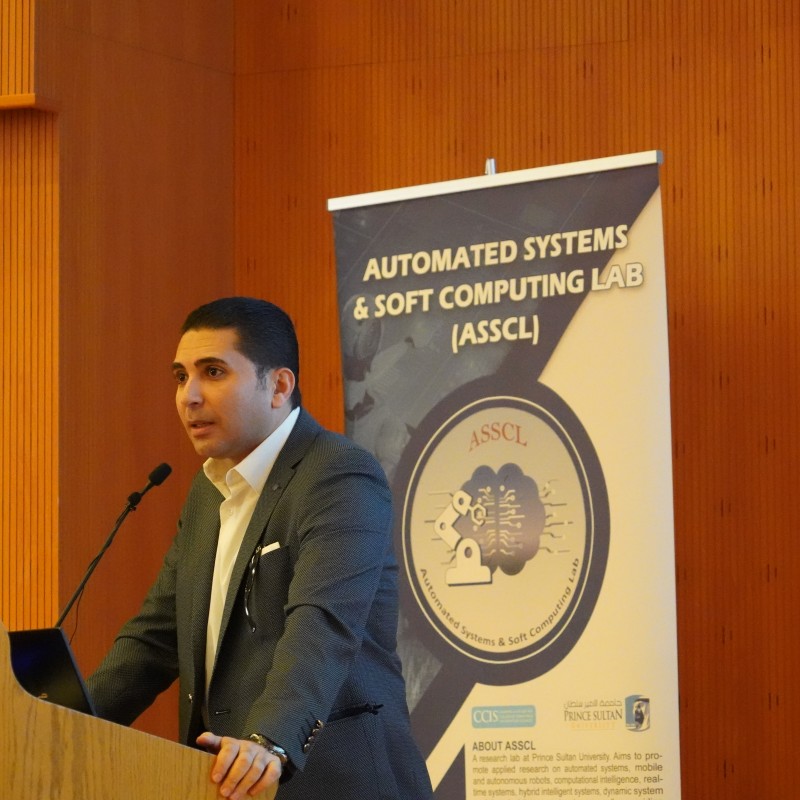
Ahmad Taher Azar
Prince Sultan University, Saudi Arabia
Muhammet Deveci
University College London, UK
Stefano Cirillo
University of Salerno, ItalyPROGRAM COMMITTEE